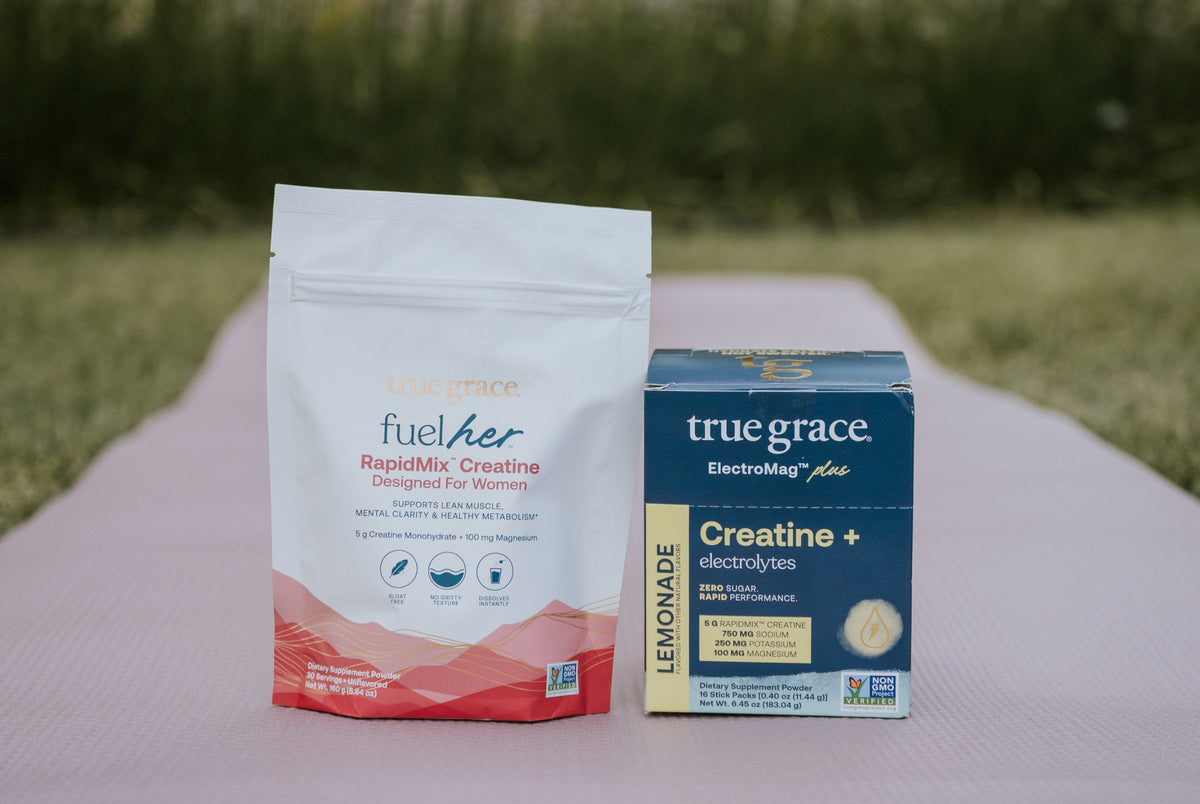
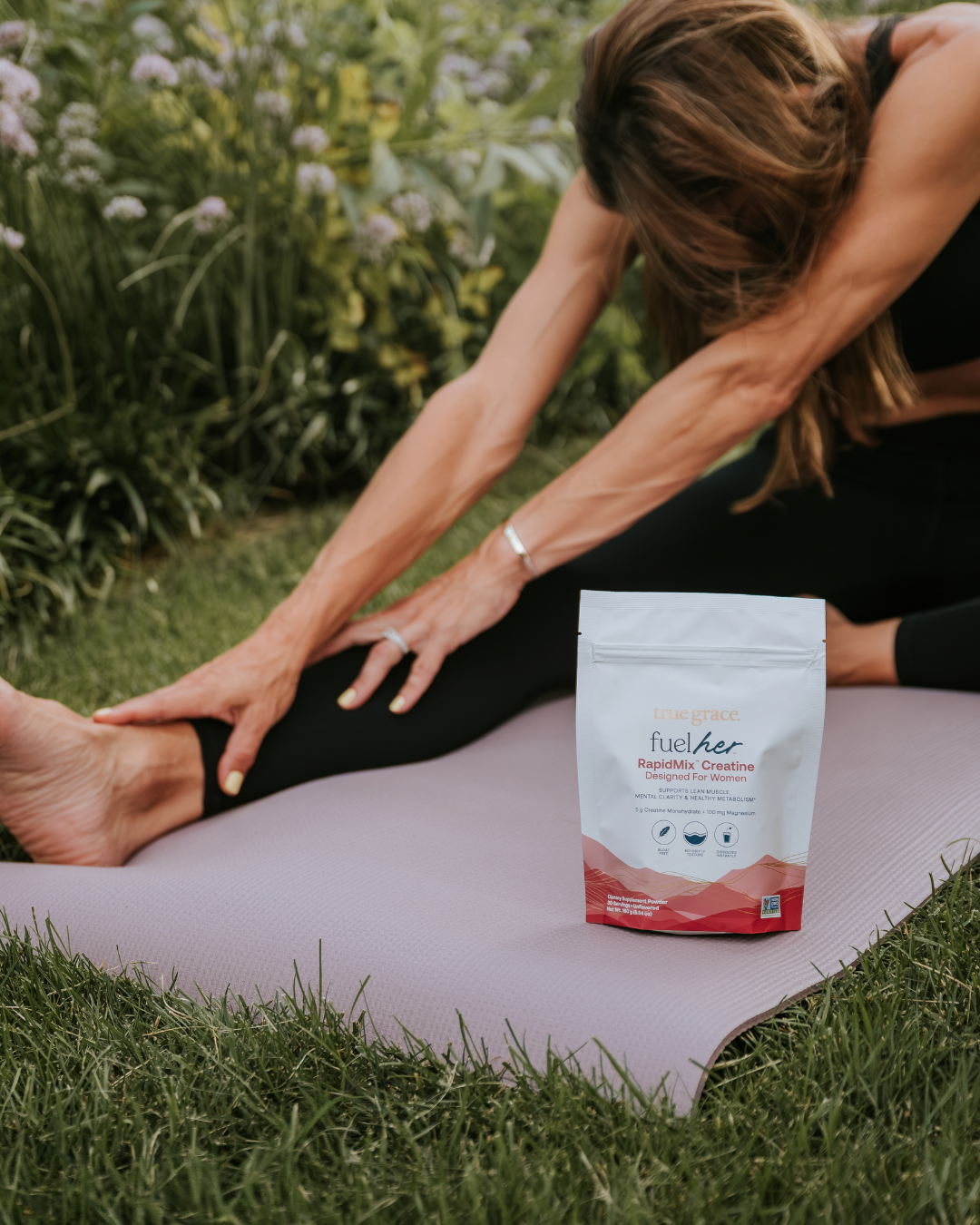

It usually starts with a buddy at the gym, or a podcast host who won't stop bringing it up. Then your partner, who's been taking her own scoop for months, leaves the pouch on the counter like a not-so-subtle hint. Suddenly you're wondering whether creatine is just for 22-year-olds chasing a bench press record or something a guy in his 30s or 40s should actually be taking.
The questions are pretty consistent. Will it make me bloated? Is the hair loss thing real? Does it do anything if I'm not lifting five days a week? And how much do I actually need?
Short answer: it's the most studied sports supplement on the shelf, and the case for it gets stronger with age, not weaker. Here's what the research says about muscle and recovery, and where the evidence is still catching up.
How creatine actually works
Your body already makes about a gram a day of this compound from amino acids, and you pick up more from red meat and fish. Roughly 95 percent of it is stored in your skeletal tissue as phosphocreatine. When you do something short and intense, like a heavy set of squats or a sprint for a closing train door, your cells burn through their immediate energy supply in seconds. Phosphocreatine refills that supply fast, which is what buys you the extra rep or two.
Supplementing tops off those stores, typically by around 20 to 40 percent. A fuller tank means slightly more work per session, and over weeks that extra work adds up to real gains in strength and lean mass.
How much creatine should men take? Most research uses 3 to 5 grams a day of the monohydrate form, and the International Society of Sports Nutrition's 2017 position stand considers that range safe for long-term use in healthy adults. You don't need a loading phase, since a steady daily dose saturates your stores in about three to four weeks. Timing matters far less than consistency, though taking it after a workout is an easy habit to keep.
If you have kidney disease or take medication that affects your kidneys, check with your doctor before starting.
Why your 30s are when muscle starts slipping
Here's the part nobody mentions at your 30th birthday party. Most adults start gradually losing lean mass somewhere in their 30s, and the pace picks up with each decade, especially without regular strength work. It's slow enough that you barely notice, right up until helping a friend move a couch turns into a two-day recovery project.
This is where the research gets genuinely interesting. A 2017 meta-analysis in the Open Access Journal of Sports Medicine pooled 22 randomized trials covering 721 adults with an average age between 57 and 70, all doing resistance training. Those who added the supplement gained about 1.37 kg (roughly 3 pounds) more lean tissue than those on placebo, along with bigger improvements in chest press and leg press strength.
Those participants were older than most guys reading this, and that's sort of the point. The earlier you build the habit, the more you'll have to work with later. One important catch, though: it amplifies training rather than replacing it. Skip the lifting and there's not much for it to amplify.
Faster recovery, and maybe a sharper brain
Plenty of lifters say they bounce back faster between sessions. Some studies back that up, showing smaller rises in markers of muscle damage and quicker return of strength after hard exercise, though results across trials are mixed enough that it's fair to call this a likely bonus rather than a guarantee.
Your brain is an energy hog too, and it runs on the same phosphocreatine system. A 2018 systematic review in Experimental Gerontology found that supplementation improved short-term memory in healthy people. A 2024 study in Scientific Reports found that a single large dose temporarily improved cognitive performance in sleep-deprived adults. That second study used a much bigger amount than anyone takes daily, so treat it as a fascinating signal, not a reason to dump half the pouch into your coffee.
So, about your hair
If one rumor keeps guys away, it's this one. It traces back to a single 2009 study of 20 college rugby players, which found that DHT, a hormone tied to male pattern baldness, rose after a week of high-dose loading. That study never actually looked at anyone's hair.
In 2025, the Journal of the International Society of Sports Nutrition published a 12-week randomized, placebo-controlled trial that finally checked. Resistance-trained men took 5 grams a day or a placebo, and researchers measured DHT alongside hair density and follicle health. There was no difference between the groups on any of it.
If baldness runs in your family, your hairline was already on its own schedule. This just isn't what's moving it.
The no-nonsense starter guide
- Take 3 to 5 grams a day, rest days included.
- Mix it into 10 to 16 ounces of water or your post-workout shake.
- Skip the loading phase if you'd rather avoid early water weight. Any water it pulls goes inside your working cells, not under your skin.
- Pair it with strength training at least twice a week, and give it four weeks before you judge it.
What to look for on the label
Not every tub earns its spot on the counter. Look for creatine monohydrate, the form behind nearly all of the research, at a full 5 grams per serving. Shorter ingredient lists are usually better, because fillers and proprietary blends don't add anything you need. And since sports supplements are a category where contamination has been a real problem, third-party testing is worth insisting on.
That's the standard behind FuelHim™, True Grace's new performance formula for men.
Where True Grace fits
Supporting strength and recovery after 30, without the guesswork, is what FuelHim™ RapidMix™ was made for. Every scoop delivers a full 5 grams of monohydrate as OptiCreatine™, the research-backed dose, and the other ingredients line on the label reads simply "None." It's unflavored and mixes instantly with no gritty texture, so it disappears into water or whatever you already drink after a workout. FuelHim is third-party tested and Non-GMO Project Verified, as well as vegan and dairy-free, with no soy or gluten. It comes from a women-owned B Corp that practices True Transparency, in a pouch made with 30 percent post-consumer recycled plastic. Through True Grace's partnership with the ReSea Project, every pouch sold also pulls an equivalent amount of plastic out of oceans and rivers.
Worth a scoop?
If you've been on the fence, this is one of the few supplements where decades of research and the gym-floor hype actually agree. Take it daily alongside your training and check back in with yourself in a month. When you're ready, give FuelHim™ a try or see how True Grace approaches quality and testing. And if your partner's been taking FuelHer™, you can finally stop stealing her scoops.