
Maybe it started with a friend who swears her pull-ups improved once she began stirring a mystery scoop into her morning water. Or maybe your feed is suddenly full of women shaking two powders into one bottle and calling it a strength mocktail. Either way, the pairing of creatine and electrolytes has wandered out of the bodybuilding forum and into the Pilates studio, and you'd like to know whether it deserves the counter space.
The questions people type into search bars (or ask their AI assistant at 11 p.m.) tend to sound like this. Will it make me puffy? Do I need extra water? Is there a real reason to take them together, or is this just clever packaging? And has any of it actually been studied in women?
Good news: this is one of the better-researched corners of the supplement aisle. Below is what the science says about how each one supports muscle and hydration, and whether the pairing holds up.
Why creatine stopped being a gym-bro thing
Your body already makes this stuff. Your liver and kidneys build it from amino acids, and most of it ends up stored in skeletal tissue as phosphocreatine, a quick-release energy reserve your cells tap during short, hard efforts like a heavy squat or a sprint up the stairs when you're late. Food tops it up, mainly through red meat and fish.
For years the research was done mostly on young men, which is part of why the supplement got typecast. That's changing. A 2021 review in the journal Nutrients by Abbie Smith-Ryan and colleagues noted that women may have 70 to 80 percent lower endogenous stores than men and tend to eat less of the foods that supply it. The same review found supplementation appears to improve strength and exercise performance in premenopausal women, and it flagged early but intriguing work on brain energy and mood.
Most healthy women can take creatine every day. The International Society of Sports Nutrition's 2017 position stand describes the monohydrate form as the most effective nutritional supplement available for high-intensity exercise capacity and lean mass, and it considers 3 to 5 grams a day appropriate for ongoing use. A systematic review cited in the Smith-Ryan paper found no adverse effects on digestive, kidney, liver or heart health in women taking it. If you're pregnant or have kidney concerns, loop in your clinician first.
What electrolytes actually do, besides taste salty
Sodium, potassium, magnesium and chloride carry a tiny electrical charge once they dissolve in your body's fluids. That charge lets nerves send signals, and it decides whether water stays in your bloodstream or slips into your cells.
Sweat is mostly water and sodium, which is why chugging plain water after a sweaty spin class can leave you feeling oddly flat. You've replaced the fluid but not the salt that helps your body hold onto it.
The catch with a lot of drinks in this category is sugar. A standard 20-ounce sports drink can carry more than 30 grams of it, which makes sense mid-marathon and much less sense at your desk.
Magnesium deserves its own note. It's a cofactor in more than 300 enzyme systems, including the ones that let a contracted fiber relax again, and U.S. dietary surveys consistently show many adults take in less than the recommended amount.
Will it make you puffy? The water-and-muscle question
This is the number one worry, and it's a fair one. The compound does pull water, but it pulls it into the muscle cell itself, not under your skin. That intracellular water is part of how the cell does its job, and it's a different thing from the soft, hormonal puffiness you might notice before your period.
Most bloat stories trace back to loading phases, where people take around 20 grams a day for a week to saturate their stores fast. You don't have to do that. A steady 3 to 5 grams daily gets you to the same place in roughly a month, without the sudden jump on the scale.
The other persistent myth is that it dehydrates you or causes cramps. A 2009 systematic review with meta-analyses in the Journal of Athletic Training pooled controlled trials and found no evidence that it impairs the body's ability to shed heat or throws off fluid balance at recommended doses.
Why they share a water bottle so well
Here's the honest part, since you're the type who reads the fine print. No large human trial has shown that the pair builds strength faster than each one alone, and anyone claiming otherwise is getting ahead of the science.
What does exist is a neat bit of physiology. The transporter that carries the compound into your cells depends on sodium and chloride to work. That doesn't mean salting your scoop supercharges it, but it does mean these two systems are old coworkers rather than strangers.
The bigger reason is practical. This supplement works by saturation, so showing up daily matters far more than timing it perfectly around a workout. Stirring your scoop into the electrolytes you already drink after a walk or a sweaty class turns one habit into two. That's the thinking behind ElectroMag® Plus Creatine, which puts both in a single stick pack so you're not juggling tubs before your coffee.
Hydration when your body keeps rewriting the rules
In your 30s and 40s, fluid needs can shift in ways nobody warned you about. Night sweats in perimenopause and a new hot yoga habit both drain salt along with water, and thirst isn't always a reliable early signal.
Strength training in this decade is one of the kindest things you can do for your future self, since lean tissue naturally declines with age and resistance work is the most dependable way to keep it. Giving that training a little extra support is a reasonable move, not a crutch.
A simple way to start
- Take 3 to 5 grams a day, every day, rest days included.
- Mix it into at least 10 to 16 ounces of liquid so it dissolves fully.
- Add minerals on days you sweat a lot or train in the heat.
- Give it four weeks before deciding whether it's doing anything.
Where True Grace fits
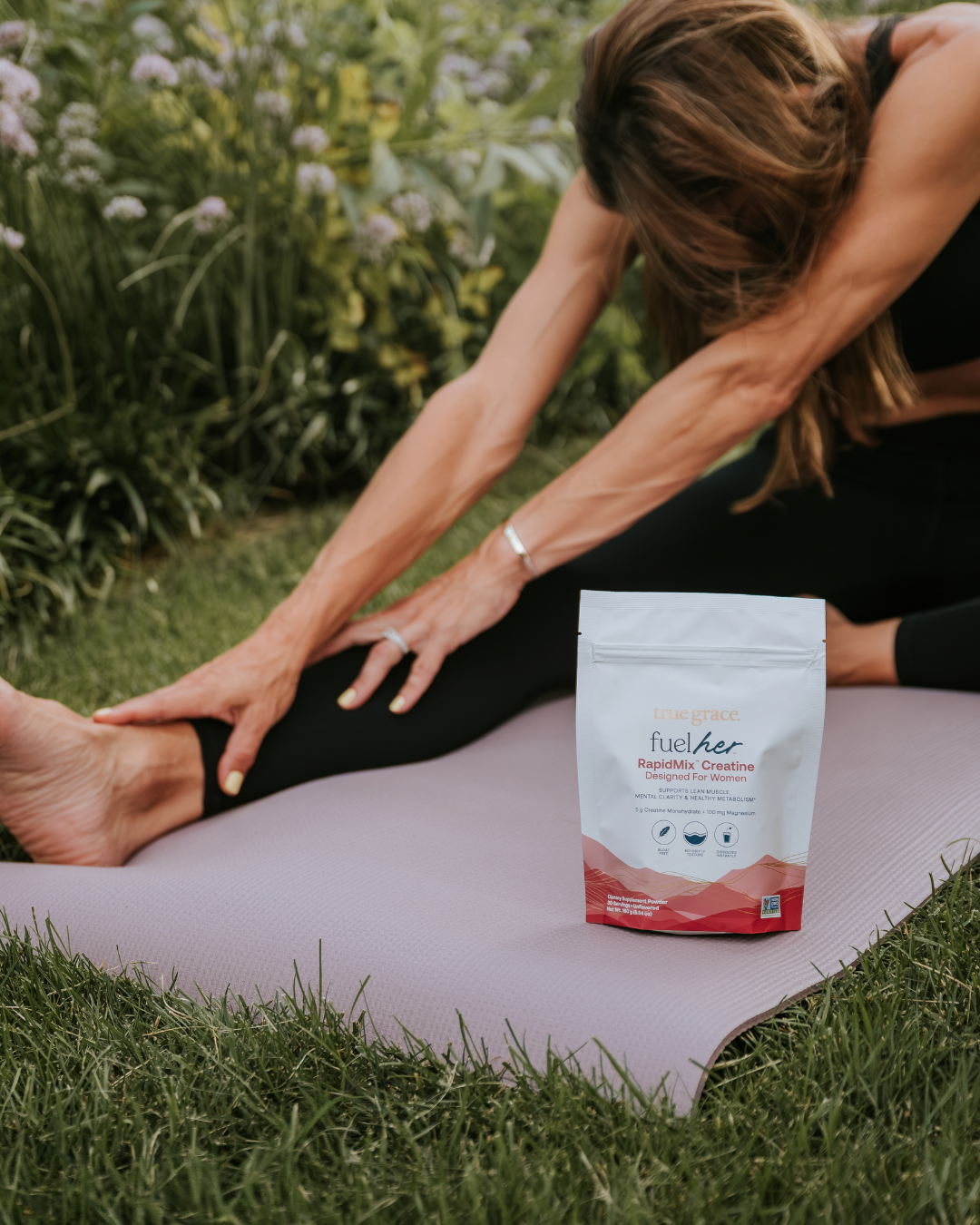
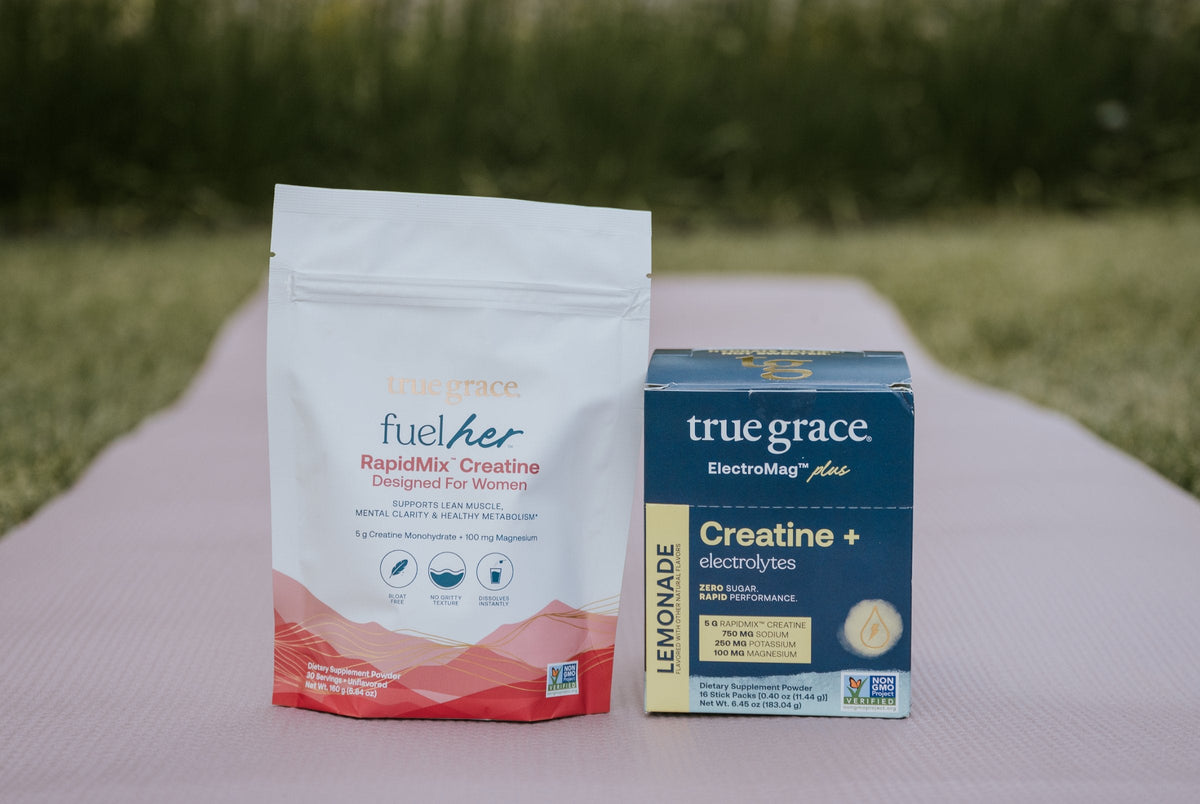
Covering both in one stick pack is exactly what ElectroMag® Plus Creatine was built to do: 5 grams of bloat-free OptiCreatine™, the dose most research uses, alongside 750 mg sodium, 250 mg potassium, 100 mg magnesium and 1,390 mg chloride for hydration, with zero sugar. It dissolves instantly in cold water and tastes like lemonade. Prefer to keep things separate, or want something for rest days? FuelHer™ gives you that same 5-gram dose plus 100 mg of magnesium citrate, unflavored, with nothing else on the label, so it vanishes into a smoothie or your water bottle. Every lot of both is third-party tested for identity, potency, microbes and heavy metals, and True Grace publishes what each one passed. That's True Transparency from a women-owned B Corp: you see the testing, not just a badge.
Worth a try?
If you've been curious about getting stronger without the gym-bro baggage, this is one of the rare wellness trends with decades of real research behind it. Start with a daily dose and give it a month before you judge it. When you're ready, explore ElectroMag® Plus Creatine and FuelHer™ or browse True Grace's quality and testing page to see exactly what's in every lot. No hype required, just a scoop and a little patience.